The ELABEST X100 Ergonomic Mesh Office Chair review is for shoppers who want more than basic seat-height adjustment: this chair combines a footrest, responsive lumbar support, and highly adjustable arms for work and downtime.
ELABEST X100 Review Summary
The quick verdict
1,000+ ratings
Read Amazon ReviewsELABEST X100
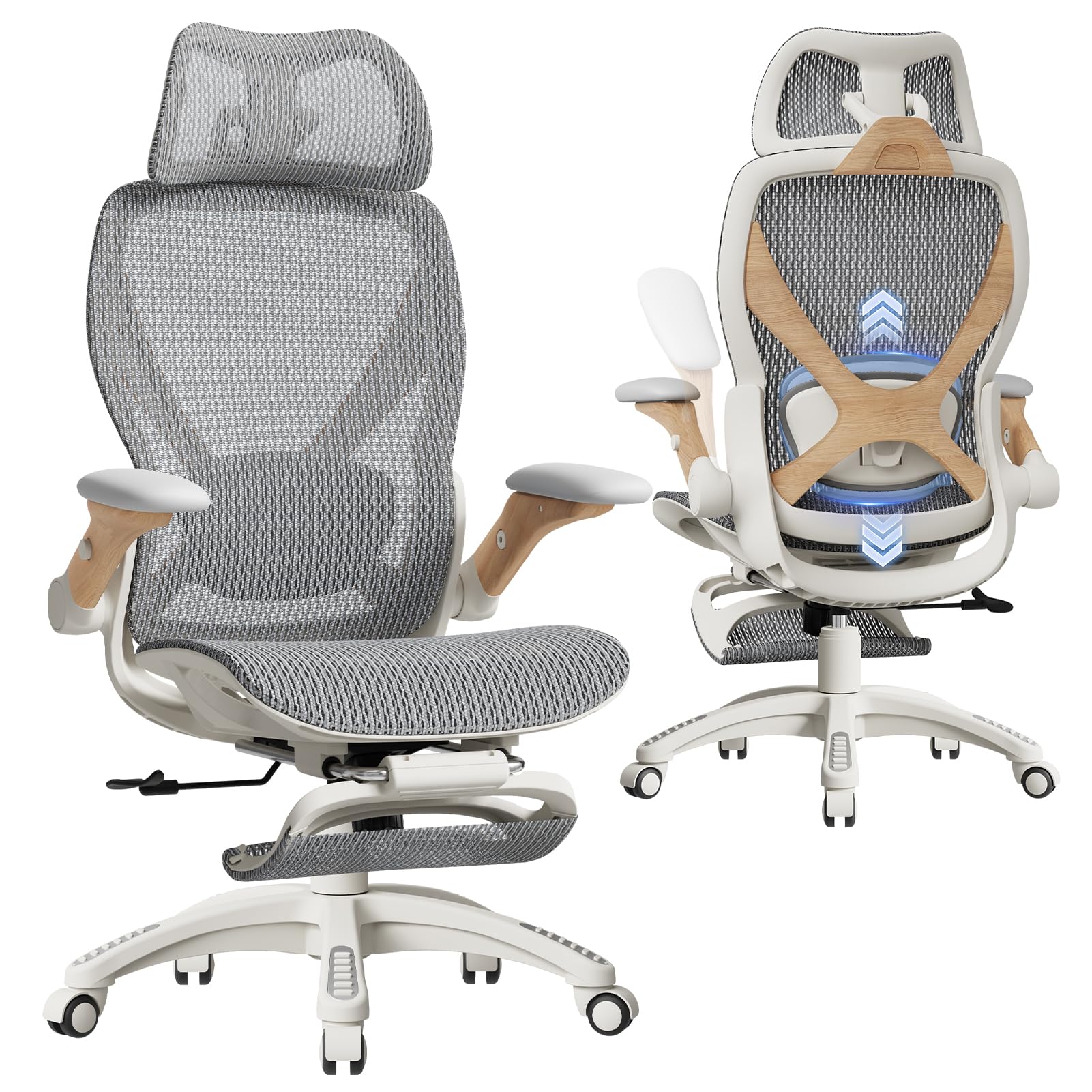
A feature-rich ergonomic chair for desk workers who want adjustable lumbar support, flip-up arms, and a built-in footrest for breaks.
- Dynamic lumbar support adjusts 1.6 inches in depth, 2 inches in height, and 15 degrees in rotation, with a spring-loaded tracking design.
- Five-direction flip-up armrests adjust for height, width, forward and backward position, and rotation; their flipped position is intended to tuck under a desk.
- The three-stage recline pairs with an 18-inch extending footrest that has two angle settings.
- The 3D headrest measures 28 centimeters and is described with a wide shape and cervical curve mapping.

Pros
- Lumbar support offers adjustments in three directions and is designed to track movement.
- The footrest, recline, and flip-up arms make the chair adaptable to work and break positions.
Consider before buying
- The many adjustment points may take time to configure; the most useful setup will depend on your body and desk.
- The footrest and high-back design call for enough clearance to extend and recline, so check the available space around your desk.
Read the full review summary
The X100 is built around adjustability. Its lumbar support is described as tracking movement while adjusting in height, depth, and rotation, and the headrest, armrests, recline, and footrest offer further ways to tailor the chair.
That breadth may appeal to people who alternate between focused desk work and reclining breaks.
Its design will be most compelling if you expect to use those adjustments regularly and have room for a high-back chair with an extending footrest.
The 300-pound capacity, BIFMA-certified construction, 18.3–23-inch seat-height range, and five-year warranty give buyers concrete fit and ownership details to weigh alongside the comfort features.
The buying factors
ELABEST X100 Scorecard
Editorial scores reflect listed features and buyer fit; they are not laboratory measurements or customer ratings.
Lumbar adjustability
The support adjusts in height, depth, and rotation, with a spring-loaded tracking design intended to move with the sitter.
Armrest flexibility
Five adjustment directions, including a flip-up position, provide considerable flexibility for desk alignment and storage.
Reclining and footrest
A three-stage reclining mechanism works with an 18-inch extending footrest and two footrest angles for changing positions.
Head and neck support
The 3D headrest has a wide design and cervical curve mapping, with a 28-centimeter adjustment specification.
Breathability
The chair uses ventilated mesh, though the airflow and elasticity figures are manufacturer comparisons rather than independent measurements.
Fit and capacity information
A seat-height range and 300-pound capacity are provided, but the description does not give a complete set of seat dimensions or a recommended user-height range.
Ownership support
The chair includes a five-year warranty and a stated tool-free assembly time, useful considerations for setup and longer-term ownership.
Key Features and Specifications of ELABEST X100
- Dynamic lumbar support adjusts 1.6 inches in depth, 2 inches in height, and 15 degrees in rotation, with a spring-loaded tracking design.
- Five-direction flip-up armrests adjust for height, width, forward and backward position, and rotation; their flipped position is intended to tuck under a desk.
- The three-stage recline pairs with an 18-inch extending footrest that has two angle settings.
- The 3D headrest measures 28 centimeters and is described with a wide shape and cervical curve mapping.
- Dual-Stripe AirMesh is used for ventilation; the supplied description compares its airflow and elasticity with standard mesh.
- The chair has a stated 300-pound capacity, BIFMA-certified construction, and a seat-height range of 18.3 to 23 inches.
- Tool-free assembly is described as taking 15 minutes, and the chair is backed by a five-year warranty.
Pros and Cons of ELABEST X100
Pros
- Lumbar support offers adjustments in three directions and is designed to track movement.
- The footrest, recline, and flip-up arms make the chair adaptable to work and break positions.
- A wide, adjustable headrest adds another fit point for users who want upper-body support.
- The stated capacity, seat-height range, BIFMA certification, and five-year warranty help frame the purchase decision.
Consider before buying
- The many adjustment points may take time to configure; the most useful setup will depend on your body and desk.
- The footrest and high-back design call for enough clearance to extend and recline, so check the available space around your desk.
- The supplied dimensions cover seat height but not seat width or depth, so confirm those measurements if fit is a priority.
Who Should Buy ELABEST X100?
Good fit
Consider the X100 if you want a chair that can shift between upright work and reclining breaks without adding a separate footrest.
Its lumbar system has several adjustment axes, while the armrests can change position or flip up when you want more room beside the seat.
It may also suit a shared home office where people need to adjust support to different postures.
Before buying, compare the 18.3–23-inch seat-height range with your desk and leg position, verify that the 300-pound capacity fits your needs, and check the chair’s footprint and clearance for the extending footrest.
Who should skip it
Look elsewhere if you want a simple chair with few settings to manage or do not expect to use a recline and footrest. The X100’s feature set makes most sense when those elements match your daily routine.
If seat width, depth, or a precise user-height range will determine fit, confirm those measurements before deciding; they are not included in the product details provided here.
How the ELABEST X100 Fits a Work-and-Relax Routine
A lumbar system with several adjustment points
The X100’s lumbar support is described as moving with the sitter while allowing depth, height, and rotational adjustment.
That gives users options for aligning lower-back contact, but the best setting is personal: take time to adjust it while sitting at your normal desk posture rather than assuming more movement automatically means a better fit.
Arms that can adapt to the desk
The five-direction armrests address a practical fit issue: arm support can be changed across several axes, then flipped upward when you want to clear the sides of the chair.
Check the armrest position against your desk height and typing posture. The flip-up option may help with storage, provided your desk opening and chair width allow the chair to slide in.
Footrest and recline change the chair’s footprint
An extendable footrest and three-stage recline make the X100 more suited to mixed work and rest than a chair designed only for upright sitting.
Consider the space behind and in front of the chair, including room to extend the footrest. If your setup is tight, measure the available clearance before committing.
Breathable mesh and fit checks
The chair’s mesh construction is intended to support airflow, while the adjustable headrest offers another contact point to tailor. For fit, the stated seat-height range is useful, but it does not answer every question about body proportions.
If seat depth or width is important to your comfort, seek those exact measurements before purchase.
Alternatives to ELABEST X100
Home Office Desk Chairs alternative
17,000+ ratings
Read Amazon ReviewsSIHOO B100 Office Chair
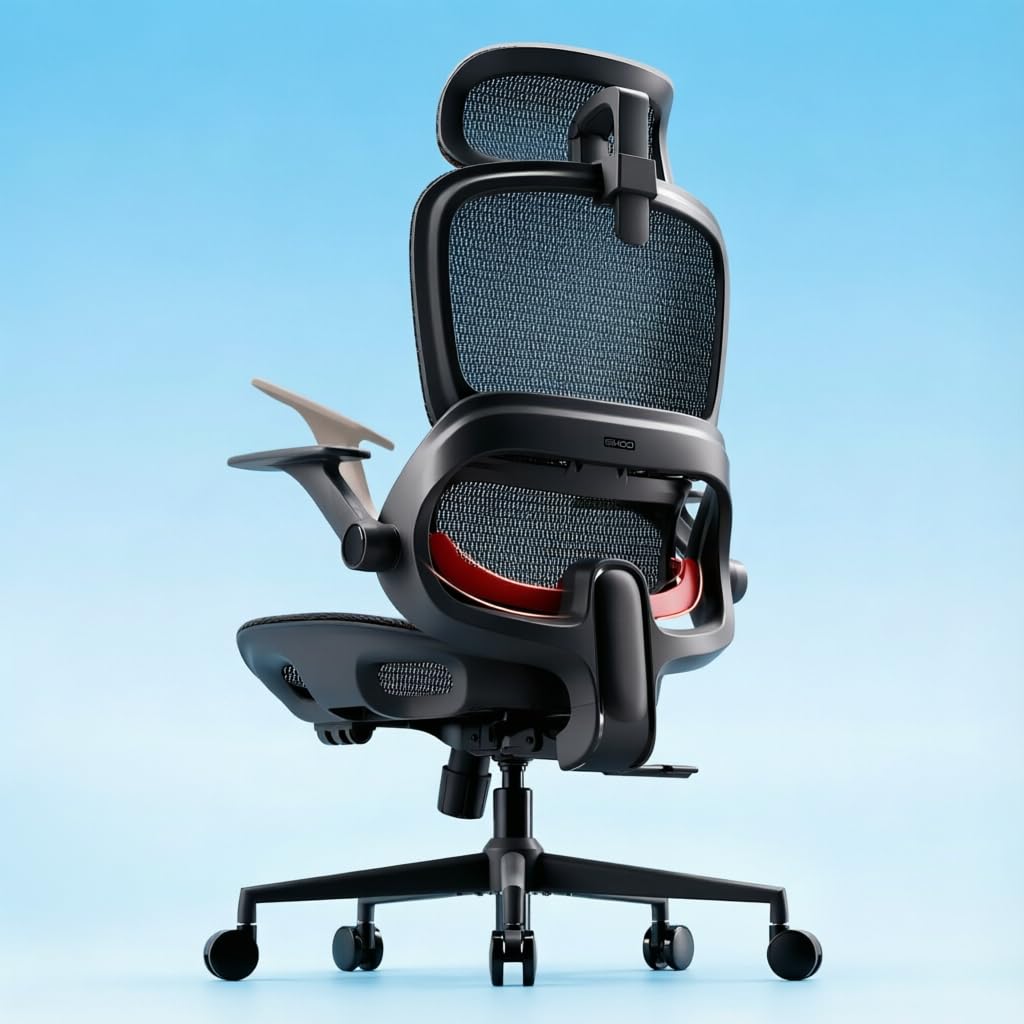
Choose the X100 if an integrated footrest and more armrest adjustment are central to your setup.
The B100 may fit better if you want recline and flip-up arms in a simpler design without making a footrest part of the decision.
- The SIHOO B100 has three recline angles, a wide 2D headrest, flip-up armrests, full-mesh construction, and a stated 300-pound capacity; its description does not list a footrest.
- The ELABEST X100 combines a footrest and three-stage recline with a multi-axis lumbar system and five-direction flip-up arms.
Home Office Desk Chairs alternative
17,000+ ratings
Read Amazon ReviewsSIHOO M57 Ergonomic Mesh Office Chair
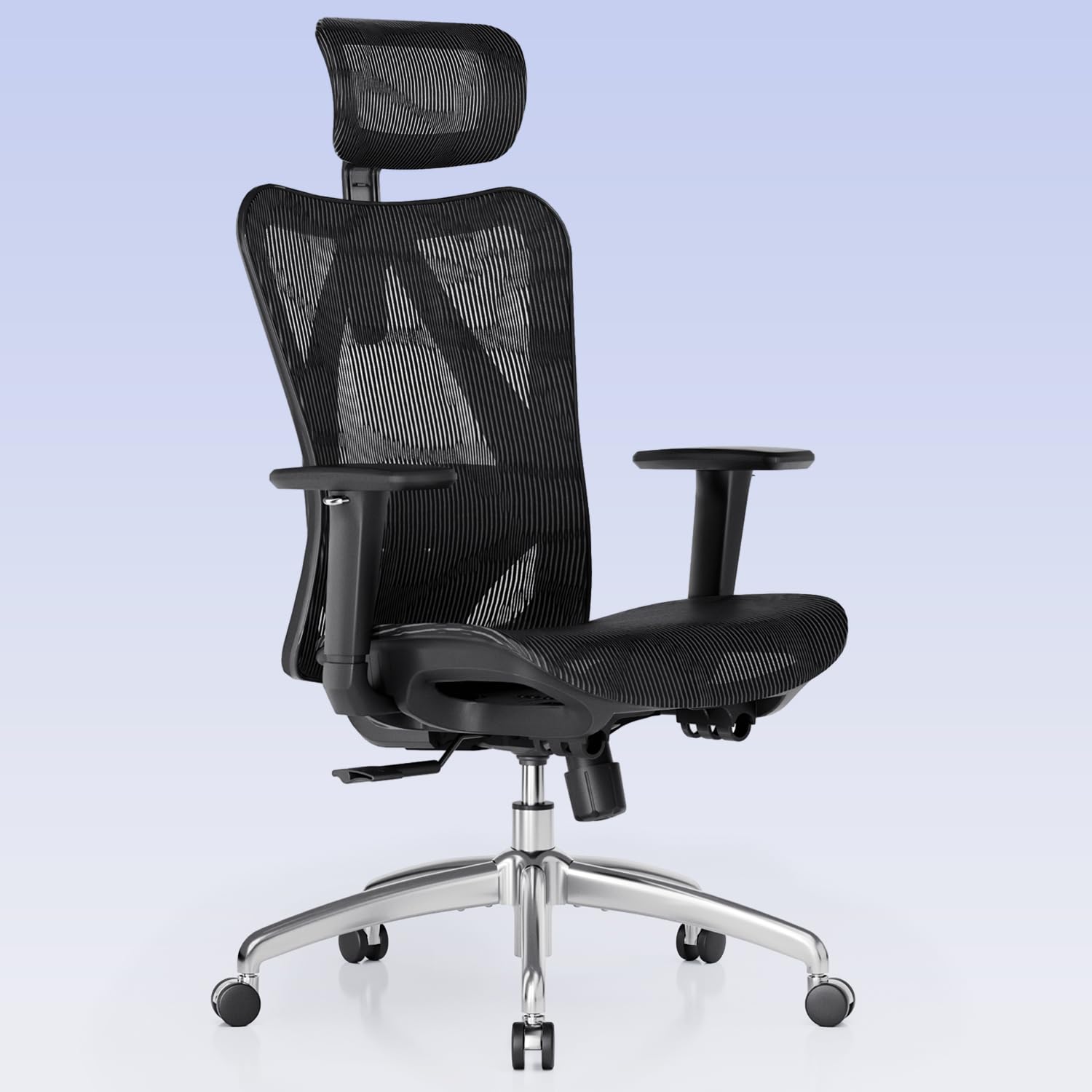
The X100 is the more relevant choice if you want a built-in footrest and multiple armrest positions. Consider the M57 if adjustable support and reclining matter more than an integrated leg rest.
- The SIHOO M57 offers 3D armrests, adjustable lumbar support and headrest, and recline from 90 to 126 degrees; its description does not include a footrest.
- The ELABEST X100 emphasizes a footrest, 5D flip-up arms, and lumbar support with depth, height, and rotation adjustments.
Is ELABEST X100 Worth It?
The ELABEST X100 is worth considering for buyers who will use its adjustable lumbar support, flip-up arms, recline, and footrest.
Those features give it a versatile work-and-break design, supported by a stated 300-pound capacity, defined seat-height range, and five-year warranty.
Check desk clearance and chair fit before buying, especially if you need exact seat-width or seat-depth measurements. If the footrest and broad adjustability would go unused, a simpler office chair may be a better match.
Your review at a glance
1,000+ ratings
Read Amazon ReviewsELABEST X100
A feature-rich ergonomic chair for desk workers who want adjustable lumbar support, flip-up arms, and a built-in footrest for breaks.
- Dynamic lumbar support adjusts 1.6 inches in depth, 2 inches in height, and 15 degrees in rotation, with a spring-loaded tracking design.
- Five-direction flip-up armrests adjust for height, width, forward and backward position, and rotation; their flipped position is intended to tuck under a desk.
- The three-stage recline pairs with an 18-inch extending footrest that has two angle settings.
- The 3D headrest measures 28 centimeters and is described with a wide shape and cervical curve mapping.